No Products in the Cart


A hemp wrap is a product description, not a standardized recipe. Some wraps are mostly hemp plant material, some blend hemp with other plant matter, binders or flavoring, and the words “hemp,” “natural” or “plant-based” on the front of a pack do not tell you which one you hold. Once you know the handful of questions to ask of a label, the ingredient list becomes easy to read. This guide gives you those questions, explains the terms, and shows how they apply whether you roll your own or buy ready-made.
If you would rather skip the wrapping step, our CBD pre-rolls come already rolled from flower made with natural and organic ingredients and no additives.
A hemp wrap is a thin sheet used to roll blunts and pre-rolls, sold as an alternative to tobacco-leaf blunt wraps and to standard rolling papers. The name suggests a single ingredient, and in the best case the ingredient list is short and plain. But because no single standard says what “hemp wrap” must contain, the term can cover very different products.
In practice, you will meet a few broad constructions:
Which of these you have affects burn, flexibility, taste and, most importantly, what else is in the sheet besides hemp. The label should tell you; the marketing name will not.
A wrap that is honest about its makeup will list each of the following clearly, or state that it is absent.
The base is the hemp leaf, fiber or pulp. A good label says which. “Hemp” alone leaves open whether you are looking at raw leaf, processed fiber or a reconstituted sheet. GreenLeafInsider’s editors make the point that “hemp wrap” does not signal that the whole wrap is raw hemp leaf.
Sheets formed from ground plant matter need something to hold them together. If a wrap is built this way, the binder belongs on the ingredient list. When a list is missing or vague, treat that as unanswered information rather than as proof of purity.
Flavored wraps get their taste from added flavorings or terpenes, and some carry color as well. A peer-reviewed study of hemp wrap use among U.S. young adults flagged flavor additives and terpenes, along with synthetic psychoactive THC, as composition concerns that may affect abuse liability, and noted that research on hemp wraps is limited and production and marketing lack oversight. If you prefer a clean smoke, an unflavored wrap with a short list is the simplest route.
Hemp does not produce nicotine. The tobacco plant and related nightshade species do, as GreenLeafInsider’s guide explains. So the check is simple: does the packaging say the product contains no tobacco and no nicotine, and does the ingredient list agree?
The reason to check is that wraps sold as “tobacco-free” are not the same thing as wraps made only of hemp. In a 2025 survey of 4,760 Connecticut high school students, researchers reported that among adolescents with lifetime cannabis blunt use, 49.7% knew of tobacco-free blunt wraps and 24.7% had used them. Some of those users reported putting tobacco in them, which shows that a wrap can be tobacco-free in the pack and still end up with tobacco in the roll. The same paper notes that these wraps are not regulated by the FDA as tobacco products. That is a good reason to read the pack rather than assume.
A hemp wrap is not automatically a CBD product. The same study of young adults notes that some hemp wraps may contain varying levels of CBD or CBD derivatives, so if cannabinoid content matters to you, look for it on the label and for a lab report from the maker. Do not infer it from the word “hemp.”
Federal law defines hemp as the cannabis plant, including any part and all derivatives, with a delta-9 THC concentration of no more than 0.3% on a dry-weight basis, as summarized in the American Herbal Products Association’s status report. That is a limit on THC. It does not set rules for flavorings, binders or tobacco in a rolling product, so legal hemp status and a clean ingredient list are two separate questions. For more on the framework, see our overview of federal hemp laws.
State rules on hemp products vary, so check your own state’s requirements before ordering.
Organic is the most over-read word on a hemp label. The USDA-recognized certification rules are strict, and they apply to the whole chain. According to the Organic Trade Association’s FAQ on hemp certification, a brand can make an organic claim on a processed hemp product only if the hemp is certified organic at the farm level and every post-harvest handler and processor, covering drying, packing, repacking, labeling and storage, is also certified under 7 CFR Part 205.
In practical terms:
We go deeper on the seal itself in our guide to USDA organic CBD certification.
You can run this check in under a minute, on a shelf or on a product page.
To see how the same logic applies to the roll as a whole, our comparison of hemp wraps versus tobacco walks through what each smoke contains.
The honest answer is that the research is still thin. Hemp contains no nicotine, which is the clearest difference from tobacco-leaf wraps. But combustion of any plant material produces smoke, and the young adult study cited above concludes that the public health implications of hemp wrap use are hard to assess given limited research and little oversight of how the wraps are produced and marketed. Treat “nicotine-free” as a statement about nicotine, not a promise about everything else in the smoke.
If you have a respiratory condition, are pregnant, or take medication, talk to your doctor before smoking anything, hemp included.
More common than many expect. In a May 2022 national sample of 1,178 U.S. young adults, 22.7% had ever used a blunt wrap and 14.3% had ever used a hemp wrap, with 2.3% reporting use in the past 30 days for hemp wraps. That popularity is part of why label literacy matters: many people are choosing wraps on the strength of one word.
If you stock products for resale, the same label discipline protects your customers and your reputation. Ask each supplier for the full ingredient list, a statement on tobacco and nicotine, and documentation for any organic or cannabinoid claim. Keep those documents with your purchase records. A supplier who answers these quickly is one you can build a menu around.
Most of the confusion about wraps comes from one fact: the wrap is another ingredient in what you smoke. Everything between the plant and your lungs is a choice someone made, and the shorter that list, the easier it is to know what you are getting.
That is why we begin at the plant. Our products are made with natural and organic ingredients, guaranteed THC-free and with no additives. When you roll your own, you can decide how much goes between the flower and your hands. When you want it done, a pre-roll gives you the flower in a ready format.
We respect both indoor and outdoor hemp growing, and we care about trichomes, cure and freshness, because that is what you taste. Our customers tell us they value fresh inventory, reliable stock, fast shipping and responsive support, and that is what we work to deliver on every order.
Whatever you roll with, read the label the way we read a harvest: base material first, then everything added to it.
Michael
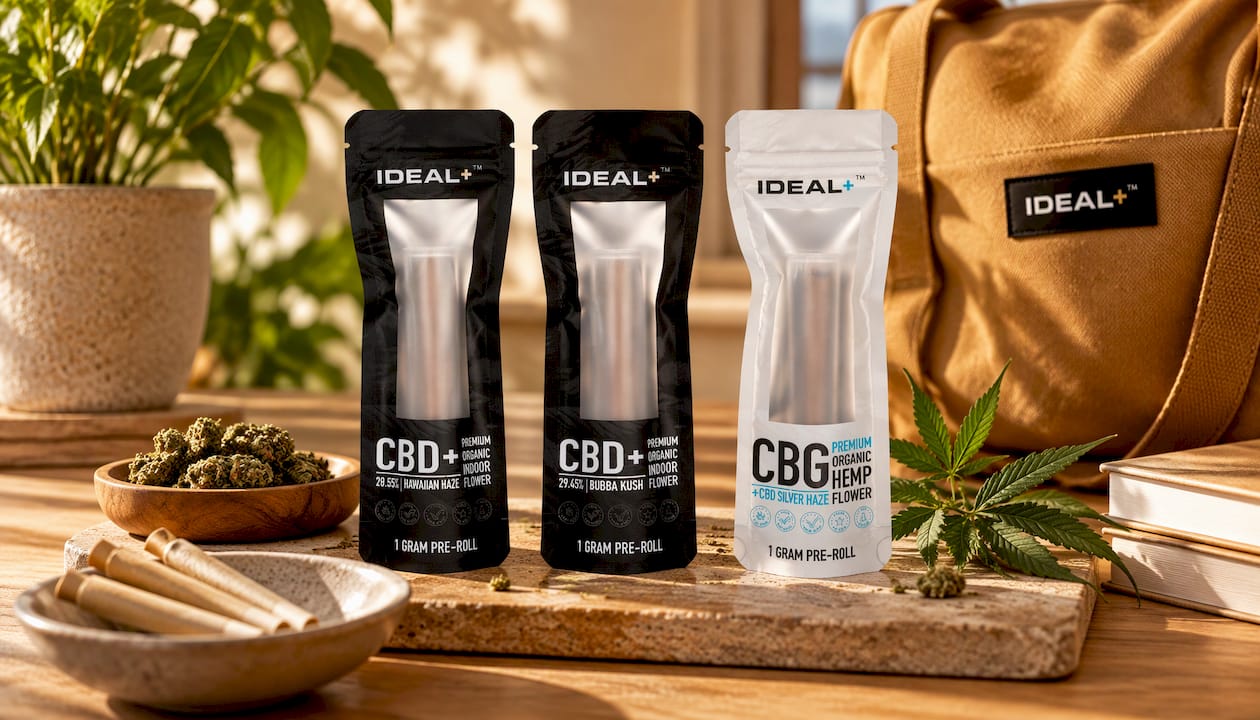
If the real goal is a clean, simple smoke, start with the flower. Our CBD flower is made with natural and organic ingredients, guaranteed THC-free and with no additives, and our CBD pre-rolls come rolled and ready. You can browse strains such as Hawaiian Haze or Bubba Kush pre-rolls.
Buying for a business? Our wholesale collection covers full-term flower, smalls and trim in bulk quantities. Prefer a different format? We also offer CBD tincture drops, vapes and concentrates.
Hemp does not make nicotine, so a pure hemp wrap removes that ingredient. Researchers say, however, that the wider health picture is hard to judge because studies are limited and manufacturing is lightly overseen. Read the label for tobacco, nicotine and flavor additives.
Not necessarily. A hemp wrap is not automatically a CBD product, though some may contain varying levels of CBD or its derivatives. If cannabinoid content matters to you, look for it stated on the packaging or in the maker’s lab report.
Tobacco-leaf blunt wraps are made from tobacco. Hemp wraps use hemp leaf, fiber or pulp, and some add binders, flavorings or color. The ingredient list tells you which kind you have.
Organic certification tells you how the hemp was grown and handled, from the farm through every processing step. It does not make smoke harmless, and it does not cover everything in the product, so check the ingredient list as well.
